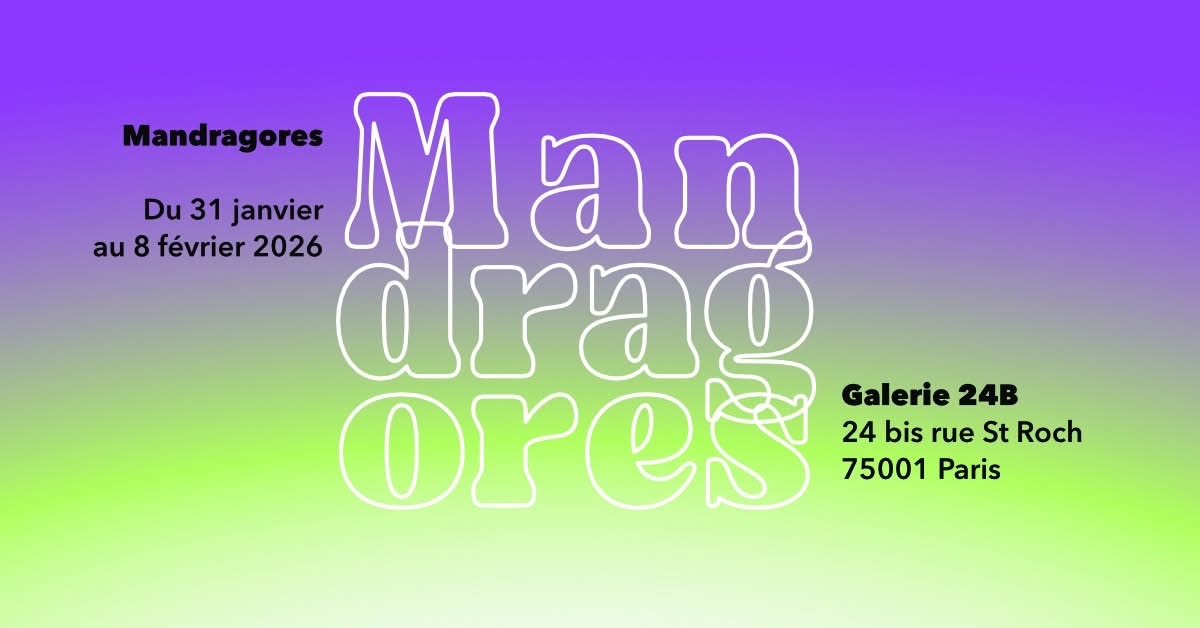
MANDRAGORES
Commissariat: Laurent Quénehen
— Du 31 janvier
au 08 février 2026
Vernissage le samedi 31 janvier 2026 à partir de 14h30
MANDRAGORES- Galerie 24b, 24 rue Saint Roch, 75001 Paris du 31 janvier au 8 février 2026
Avec : Juli About, Céline Achour, Eric Acostachioaei, Isabelle Aguera, Théophile Arcelin, Adriana Balazova, Sarah Barthe, Nicolas Bernière, Anne Bertoin, Nathalie Bibougou, Morgan Bisoux, Régina Blaim, Ana Bloom, Sasha C. Bokobza, Eric Bottero, Aurélie Brame, Noémie Brancard, Anne Brenner, Marie Cagnasso, Olga Caldas, Ludovic Cantais, John Carrid, Côme Cathalaa, Jacques Cauda, Elsa Cha, Amel Chaggour, Claire Chalet, Benoit Chapon, Zoë Chiar, Tamara Chkhikvadze, Eric Citerne, Maria Clark, ML Colrat, Adrien Conrad, Céline Cornillaux, Sébastien Crosnier, Ariane Crozet, Ayako David Kawauchi, Daphné Dejay, Harold Denneulin, Michel Devoisin Lagarde, Laure Djourado, Elise Doss, Alain Duchesne, Irina Eliashvili, Céline Excoffon, Dominique Forest, Sarah Fouquet, Aurélie Galois, Justine Gasquet, Cécile Gonneau, Fariba Gorijian, Magali Goubert, Clémentine Gouin, Julien Griffaud, Aurélia Gritte, Guacolda, Florence Guillemot Vilain, Jb Hanak, Larisa Hancu, Ewa Held, Nicolas Hell, Eléonore Janny, Joko, Michaël Jourdet, Katia Kameneva, Hana Kanehisa, Laurie Karp, Lucie Kerouedan, Khriska, Katarina Kudelova, Edith Landau, Cassandre Lepicard, Chloé Lethbridge, Quentin Liu, Sophie Lormeau, Paquita Loup, Anna March, Mark Peintre, Brigitte Masquelier, Marine Médal, Hélène Milakis, Hope Mokded, Laure Molina, Géraud Mordin, Pascale Morel, Ricardo Mosner, Hélène Mougin, Julie Navarro, Piet. sO, Amélie Pironneau, Frédéric Pompeani, Vincent Puren, Jeanne Rimbert, Stella Rinke, Daniela Roman, Sarah Roshem, Sophie Sainrapt, Mariko Saito, Patricia Salen, Clotilde Salmon, Delphine Sandoz, Alice Sfintesco, Simone, Marilda Simonidhi, Rose Slavy, Marianne Smolska, Bettina Sultan, Anne-Claire Thevenot, Albertine Trichon, Julia Tsapurak, Céline Turlotte, Xecon Uddin, Florence Vasseur, Annabelle Verhaeghe, Isabelle Vernier, Doina Vieru, Hélèna Villovitch, Egle Vismante, Jing Wang, Dominique Weill, Charlie Wellecam, Catherine Wolff, Esther Wuhrlin, Jola Zauscinska, Wenjue Zhang.
Tous les jours de 11h à 19h
Ou sur rendez-vous: 24b.paris@gmail.com - 06 86 93 84 69
De la mort, on s’en remet rarement, elle arrive à des heures indues en tirant la vie par les pieds. Travailler sur la mort, c’est estimer ses chances et celles des autres et en rendre compte par l’image, évoquer les liens invisibles entre la vie et la mort. Dans ce salon, le cv, la nationalité, les origines sociales, le genre et l’âge, n’ont aucune importance ; l’art comme la mort, l’amour et l’érotisme se fichent de toutes ces notions.
Le titre de l’exposition, Mandragores, fait référence à cette plante à la mythologie puissante. La plante est toxique, elle provoque des hallucinations, mais elle est également aphrodisiaque. Sa racine est anthropomorphique, on y découvre des jambes enlacées et elle pousse un cri mortel lorsqu’on veut l’arracher. La mandragore pousse sous la semence des pendus. Recherchée, elle est conservée dans un flacon et réalise les désirs de celui qui la possède, mais il faut s’en débarrasser avant de mourir sous peine de voir le diable emporter l’âme de son propriétaire, les anglais accusèrent Jeanne d’Arc d’en posséder une. Les mandragores sont magiques, comme ce salon dans la galerie 24b qui est situé sur l’emplacement de l’ancien cimetière de l’église Saint Roch. Les oeuvres exposées dans Mandragores, si vous les regardez attentivement, ont ce caractère étonnant d’entrer en contact avec les morts, vous y retrouverez vos proches et vos amis partis trop tôt, victimes de maladies ou de la violence de nos sociétés contemporaines.
Laurent Quénéhen, commissaire de Mandragores.
Mandrakes – From 31 January to 8 February 2026 (11am – 19 pm)
Death is something we rarely recover from, it arrives at unexpected moments, dragging life away. Working on death means assessing one's own chances and those of others and expressing this through images, evoking the invisible links between life and death. In this salon, CVs, nationality, social origins, gender and age don’t have any place; art, like death, love and eroticism, cares nothing for all these claims.
The title of the exhibition, Mandrakes, refers to this plant with its powerful mythology. The plant is toxic, causing hallucinations, but it is also an aphrodisiac. Its root is anthropomorphic, with entwined legs, and it lets out a deadly cry when someone tries to pull it up. The mandrake grows under the seeds of hanged men. Highly sought after, it is kept in a bottle and fulfils the desires of its owner, but it must be disposed of before death, otherwise the devil will take the soul of its owner. The English accused Joan of Arc of possessing one. Mandrake roots are magical, like this room in Gallery 24b, which is located on the site of the former cemetery of Saint Roch Church. If you look closely at the works on display in Mandrakes, you will see that they have the astonishing ability to connect with the dead. You will find your friends and loved ones who left us too soon, victims of disease or the violence of our contemporary societies.
Laurent Quénéhen, curator of Mandrakes.
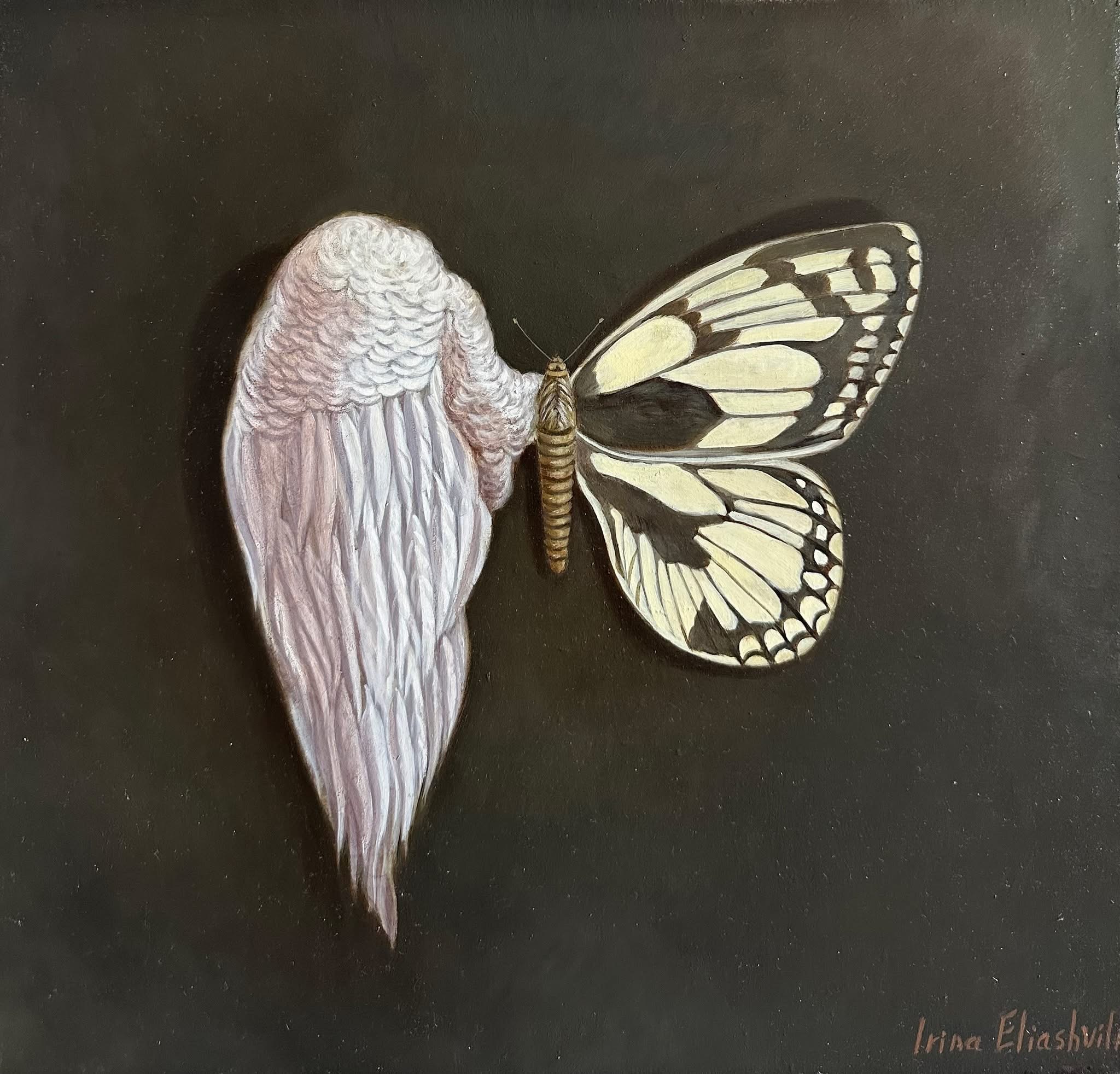
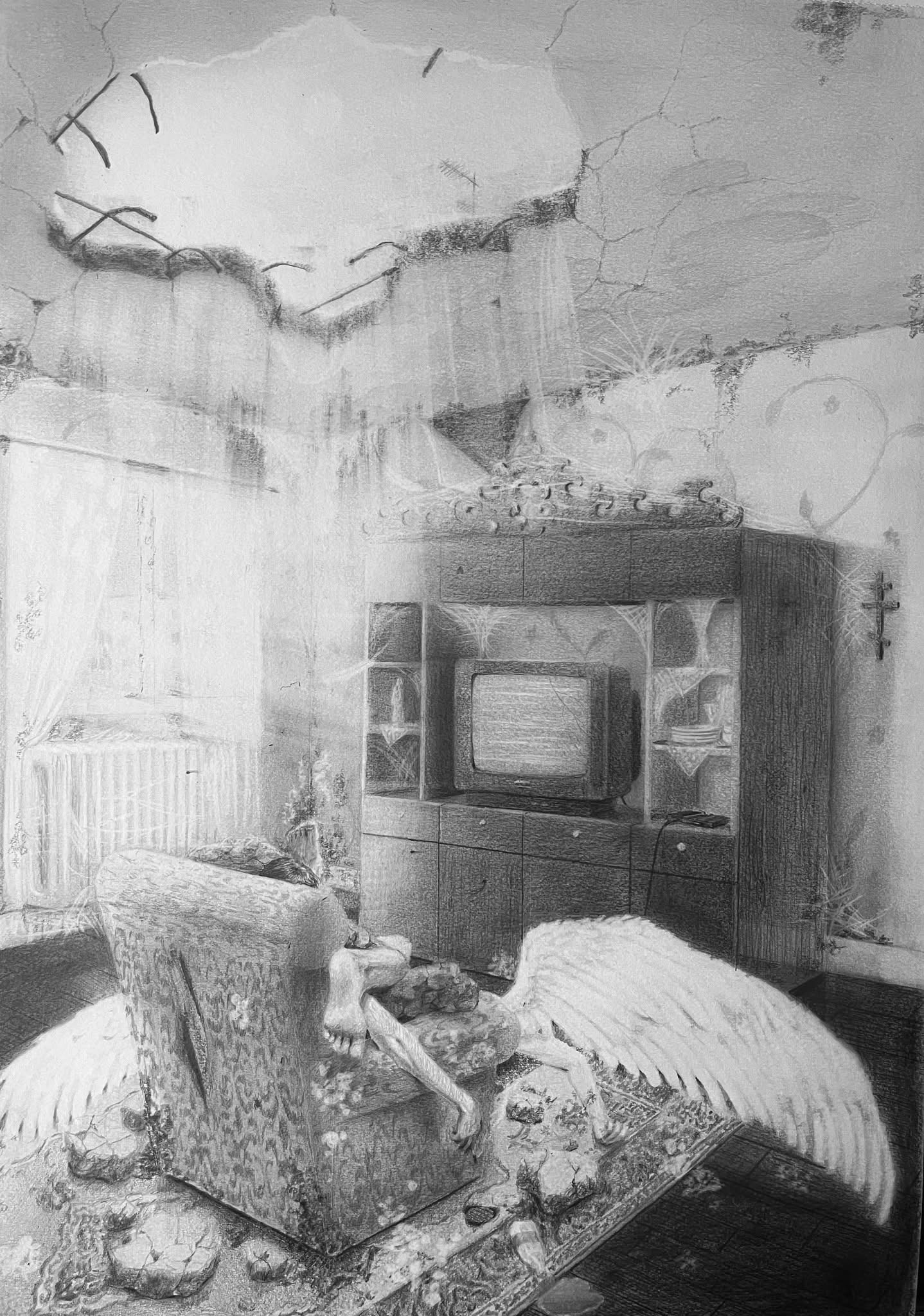
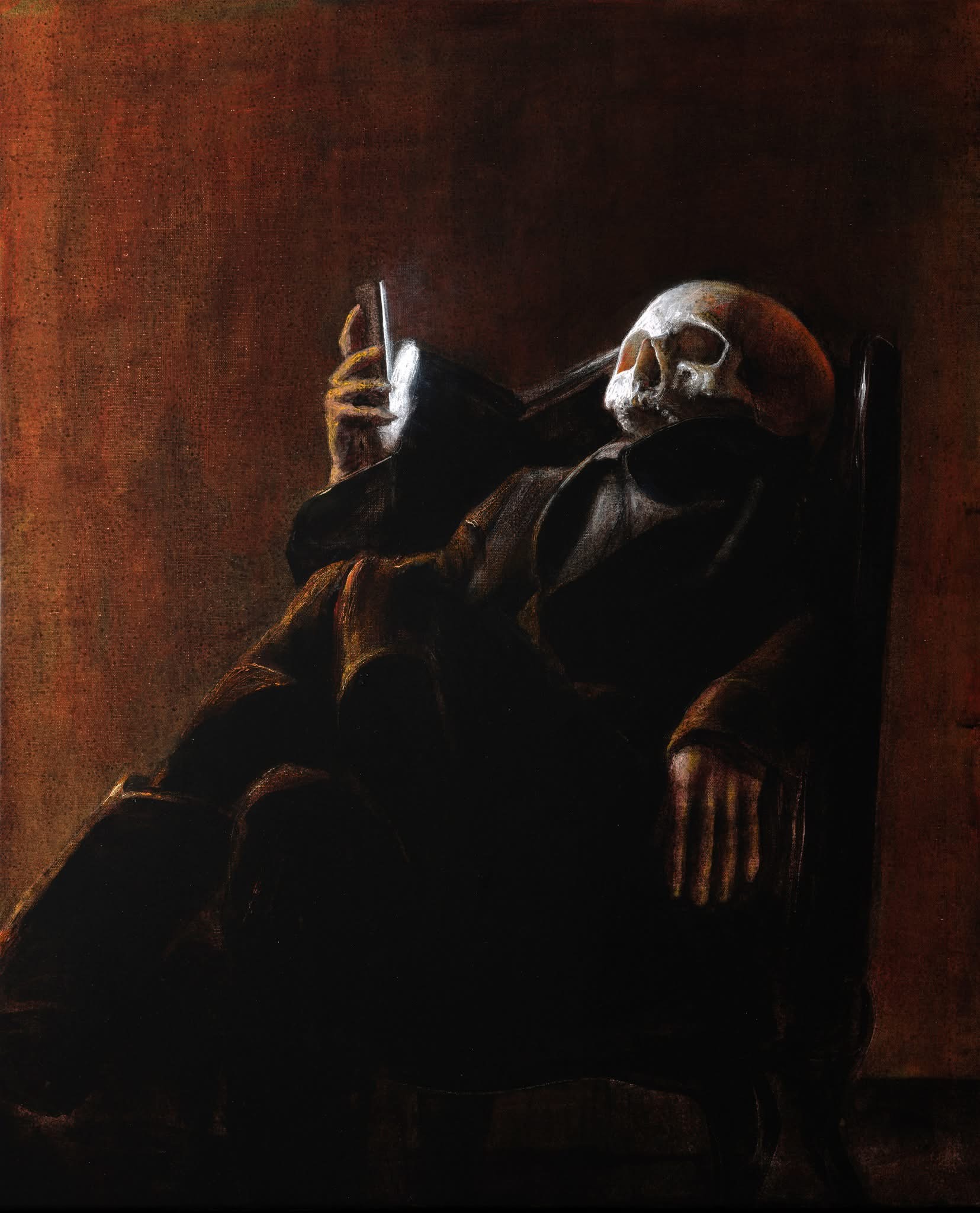
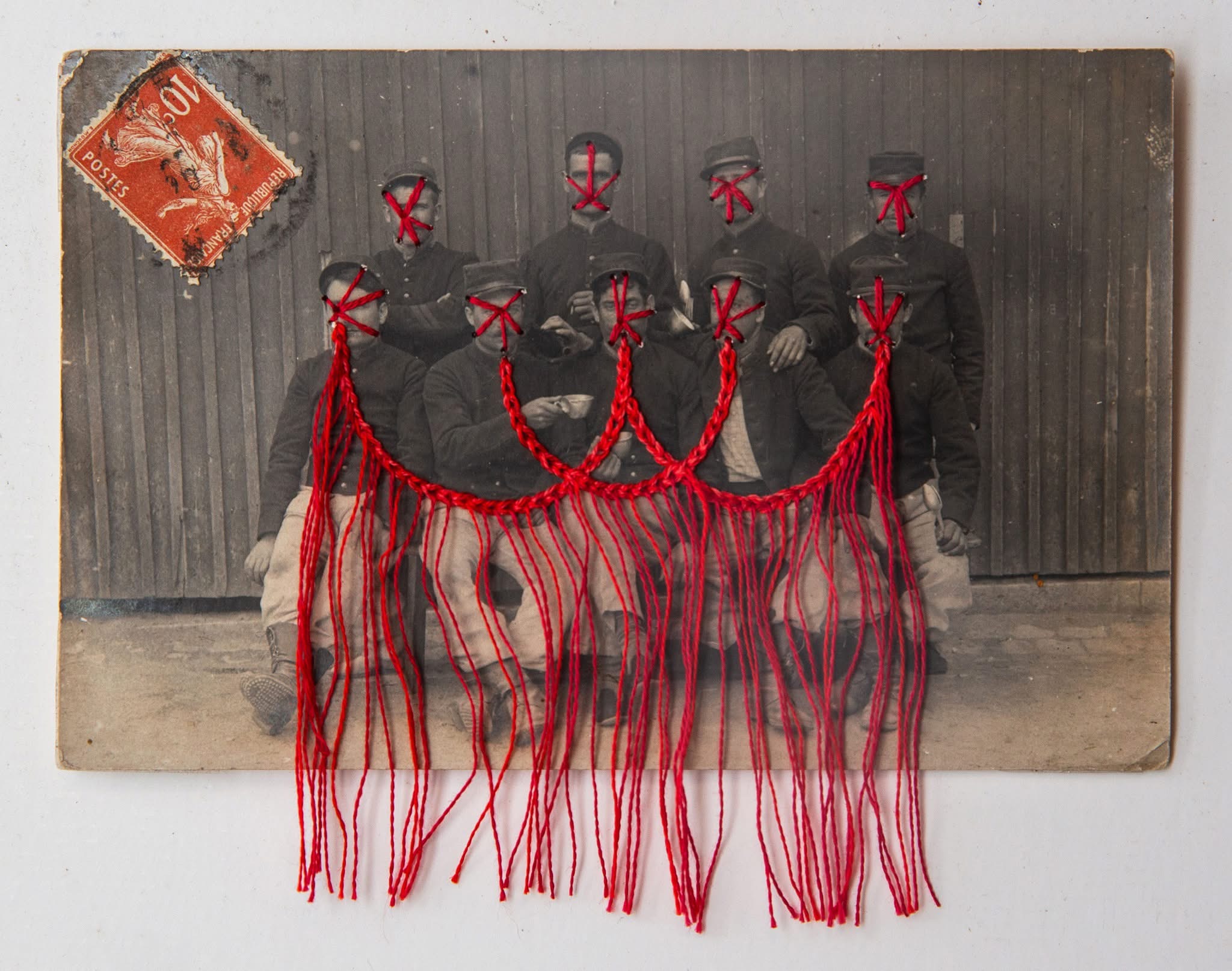
Quelques oeuvres exposées: